Question 1 of 20Signs, signals and road markings
British Columbia road signs test: free practice with 20 sign questions.
Question 1 of 20Signs, signals and road markings
Question 2 of 20Signs, signals and road markings
Question 3 of 20Signs, signals and road markings
Question 4 of 20Signs, signals and road markings
Question 5 of 20Signs, signals and road markings
Question 6 of 20Signs, signals and road markings
Question 7 of 20Signs, signals and road markings
Question 8 of 20Signs, signals and road markings
Question 9 of 20Signs, signals and road markings
Question 10 of 20Signs, signals and road markings
Question 11 of 20Signs, signals and road markings
Question 12 of 20Signs, signals and road markings

Question 13 of 20Signs, signals and road markings
Question 14 of 20Signs, signals and road markings
Question 15 of 20Signs, signals and road markings
Question 16 of 20Signs, signals and road markings
Question 17 of 20Signs, signals and road markings
Question 18 of 20Signs, signals and road markings
Question 19 of 20Signs, signals and road markings
Question 20 of 20Signs, signals and road markings
Answer each question to see the explanation. Keyboard: A–D or 1–4 to answer, N next, P previous.
Canadian/B.C. road signs as shown in Learn to Drive Smart; about one in five test questions are on road signs (ICBC also offers a separate road signs practice test). 16 correct (80%) is our practice mark, not an official pass mark.
Our own simplified drawings of the signs learners meet most. The full list, with meanings, is in the Canada sign library; the official reference is the Learn to Drive Smart: Your guide to driving safely.
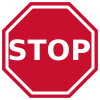
Come to a full stop at the line or crosswalk, then go only when it is safe.
Slow down or stop and let traffic on the crossing road go first.
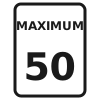
The highest speed allowed on this road.
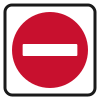
You may not enter this road from this direction.
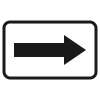
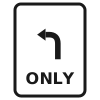
Traffic moves only in the direction of the arrow.
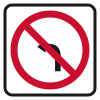
Left turns are not allowed here.
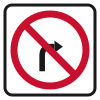
Right turns are not allowed here.
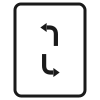
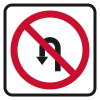
Turning around to go back the other way is not allowed here.
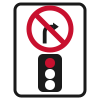
You may not turn right while facing a red light; wait for green.
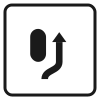
Keep to the right of the median or traffic island.
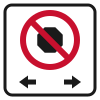
You may not stop your vehicle at all between the signs, even for a moment, during the posted times.
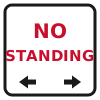
You may stop between the signs only while picking up or dropping off passengers.
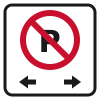
You may not park between the signs, though you may stop briefly to load or unload passengers or goods.
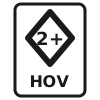
This lane is reserved for vehicles carrying at least the number of people shown.
Vehicles in this lane must turn left.
The centre lane is shared by drivers from both directions for making left turns only.
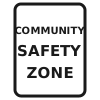
Traffic fines are increased here because the area needs extra care, often near schools or parks.
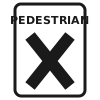
Marks a pedestrian crossover; be ready to stop and let pedestrians cross, waiting until they are completely across the road.

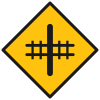
Marks the crossing itself; slow down, look both ways and stop if a train is coming.
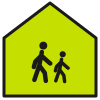
You are near a school; slow down and watch for children.
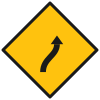
The road curves right ahead; slow down before the bend.
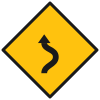
A series of curves lies ahead; drive slowly and carefully.
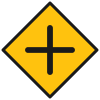
Another road crosses ahead; watch for traffic from both sides.
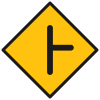
A road joins from the right ahead; watch for vehicles entering.
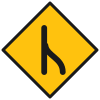
Traffic will be joining your lane from the side ahead; adjust speed to let it merge.
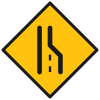
The right lane ends ahead; drivers in it must move left when safe.
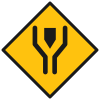
A median will separate the two directions ahead; keep right.
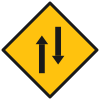
The one-way road ends ahead and oncoming traffic shares the road.
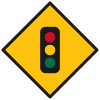
Traffic signals are ahead; be ready to stop.
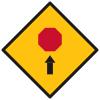
A stop sign is ahead; slow down and prepare to stop.
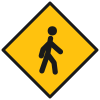
Watch for people crossing the road ahead.
Railway tracks cross the road ahead; slow down and look and listen for trains.
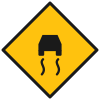
The road is slippery when wet; slow down and avoid sudden moves.
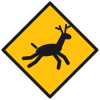
Deer often cross in this area; slow down and stay alert, especially at dusk and dawn.
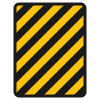
Marks an obstruction next to the road; the stripes slope down toward the side you should pass on.
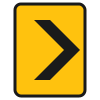
Marks a sharp turn and shows which way to steer through it.
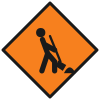
Road work is ahead; slow down, watch for workers and follow work-zone signs.
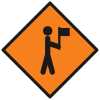
A worker with a stop/slow sign is directing traffic ahead; obey their directions.
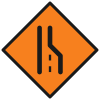
A lane is closed for work ahead; merge into the open lane early and smoothly.
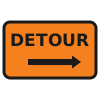
The normal route is closed; follow the detour in the direction shown.