Question 1 of 50 Road signs
A sign says "SLOWER TRAFFIC KEEP RIGHT". What does it mean?
A A. Trucks must always use the left laneB B. Slower drivers should use the right laneC C. The right lane is only for cars leaving the roadD D. You must pass slower cars on the right
Question 2 of 50 Road signs
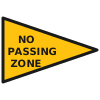
Where does Indiana post the yellow, pennant-shaped No Passing Zone sign?
A A. On the right side of a one-way roadB B. Above the left lane of a freewayC C. On the left side of a two-way roadD D. In the median of a divided highway
Question 3 of 50 Road signs · Signals and pavement markings
What does a flashing yellow arrow pointing left mean?
A A. You may turn left after yieldingB B. You have a protected left turnC C. You must stop and wait for a green lightD D. Left turns are banned at this light
Question 4 of 50 Road signs
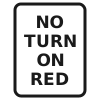
What does this sign mean while the light is red?
A A. You may turn right after a full stopB B. You may turn only if no one is comingC C. You must turn and may not go straightD D. You may not turn, even after you stop
Question 5 of 50 Road signs · Signals and pavement markings
What does a steady green light mean?
A A. Go at once, since green means you have the roadB B. Stop first and then go when it is clearC C. Go if the way is clear, yielding as neededD D. Only turns are allowed until the light changes
Question 6 of 50 Road signs
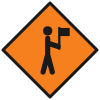
What should you be ready to do after you pass this sign?
A A. Drive on, since it is not for carsB B. Sound your horn to warn the workers you are comingC C. Speed up to get through the work areaD D. Follow the signals of a worker directing traffic
Question 7 of 50 Road signs
A red circle with a slash through a symbol means:
A A. The action shown is requiredB B. The action shown is not allowedC C. The action shown is allowed at nightD D. The action shown is just a tip
Question 8 of 50 Road signs
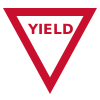
You reach this sign as a car with the right-of-way is coming. What should you do?
A A. Keep your speed if you got to the sign firstB B. Slow down or stop and let that car go firstC C. Flash your lights so the other driver waitsD D. Speed up to get through before the car arrives
Question 9 of 50 Road signs · Signals and pavement markings
You are stopped at a steady red light in Indiana and want to turn right. What does the law allow?
A A. Turning after a full stop, unless a sign forbids itB B. No turn at all until the light turns greenC C. Turning without a stop if no cars are nearD D. Turning only when a green arrow is also lit
Question 10 of 50 Road signs
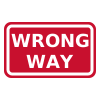
At night you pass this sign just after you turn onto a ramp. What is the best thing to do?
A A. Pull over, then turn around safelyB B. Keep driving to the next exit and get off thereC C. Speed up so you leave the ramp soonerD D. Flash your headlights and keep going
Question 11 of 50 Road signs
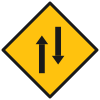
You are on a one-way street and see this sign. What does it mean?
A A. The road ahead is one-way the other wayB B. Two lanes merge into one lane aheadC C. Traffic will soon come toward you on this roadD D. You may now pass on either side of the car ahead
Question 12 of 50 Road signs
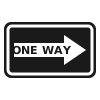
What does this sign tell you about the road?
A A. You must turn the way the arrow pointsB B. The road ahead bends the way the arrow pointsC C. All traffic moves the way the arrow pointsD D. You may pass only on the side of the arrow
Question 13 of 50 Road signs
When you reach this sign, what must you do?
A A. Slow down and go on if no one is comingB B. Stop only if cars are coming from the leftC C. Stop completely, then go when it is safeD D. Sound your horn and drive on with care
Question 14 of 50 Road signs
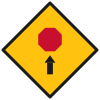
What should you do when you see this sign?
A A. Stop right next to this signB B. Slow down and get ready to stopC C. Speed up before the light changesD D. Move over to the left lane
Question 15 of 50 Road signs · Signals and pavement markings
When may an Indiana driver cross a marked bike lane?
A A. To park in it for a short timeB B. To pass slow cars on the right sideC C. Only to turn or to use a driveway or alleyD D. To wait in it during traffic jams
Question 16 of 50 Road signs
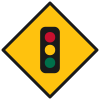
What does this sign tell you?
A A. The traffic light ahead is brokenB B. There is a stop sign aheadC C. An officer directs traffic aheadD D. There is a traffic light ahead
Question 17 of 50 Rules of the road · Safe driving and hazards
Which headlights should you use in fog?
A A. High beamsB B. Parking lights onlyC C. Low beamsD D. No lights
Question 18 of 50 Rules of the road · Parking and stopping
You park on a hill with no curb, facing up or down. Which way should you turn your wheels?
A A. Toward the edge of the roadB B. Toward the middle of the roadC C. Straight aheadD D. Away from the edge
Question 19 of 50 Rules of the road · Sharing the road
When passing a bicyclist in Indiana, what is the least space the manual says to leave?
A A. 1 footB B. 3 feetC C. 5 feetD D. 8 feet
Question 20 of 50 Rules of the road · Safe driving and hazards
Another driver makes a rude gesture at you. What should you do?
A A. Make a rude gesture backB B. Follow them so you can talkC C. Stay calm and let it goD D. Brake hard in front of them
Question 21 of 50 Rules of the road · Speed and following distance
What following gap does the Indiana manual call a good rule behind the vehicle ahead?
A A. At least 2 to 3 secondsB B. At least 1 to 2 secondsC C. At least 5 to 6 secondsD D. At least 8 to 10 seconds
Question 22 of 50 Rules of the road · Safe driving and hazards
When should you turn on your headlights?
A A. Only after the sun has fully setB B. Any time it is hard to seeC C. Only in cities with streetlightsD D. Only on highways
Question 23 of 50 Rules of the road · Sharing the road
When are cyclists hardest for drivers to see?
A A. At dusk, at night, and in bad weatherB B. At noon on a clear, dry dayC C. When they ride in a bike laneD D. When they wear bright clothes
Question 24 of 50 Rules of the road · Emergencies and equipment
You are in a crash and someone is hurt. What should you do?
A A. Drive away to find helpB B. Move the injured person right awayC C. Wait for someone else to callD D. Stop, call 911, and help if you can
Question 25 of 50 Rules of the road · Right of way
Why must drivers always yield to trains at a crossing?
A A. Trains are always on a set scheduleB B. Trains cannot stop quickly or steer awayC C. Trains have stop signs at crossings tooD D. Train crossings are private land
Question 26 of 50 Rules of the road · Emergencies and equipment
You hit a parked car and cannot find the owner. What should you do?
A A. Leave a note with your contact detailsB B. Drive away, since no one saw itC C. Wait a few minutes, then leave if no one comesD D. Call a friend to ask what to do
Question 27 of 50 Rules of the road · Safe driving and hazards
Which use of a hand-held phone is allowed while driving in Indiana?
A A. Calling 911 in a true emergencyB B. Reading a text at low speedC C. Sending a short email on a straight roadD D. Making a quick call on a quiet road
Question 28 of 50 Rules of the road · Alcohol, drugs and penalties
What happens when you mix alcohol with other drugs?
A A. The effects cancel each other outB B. The alcohol wears off much fasterC C. Nothing changes at allD D. The effects can be much stronger
Question 29 of 50 Rules of the road · Speed and following distance
Why does the risk of hydroplaning go up as you drive faster?
A A. Your brakes get too hot to work wellB B. Your engine starts to use more fuelC C. Your headlights get dimmer at speedD D. Your tires cannot push water away fast enough
Question 30 of 50 Rules of the road · Parking and stopping
Traffic is backed up and you are about to cross railroad tracks. What should you do?
A A. Stop on the tracks until traffic moves onB B. Drive onto the tracks and wait thereC C. Back up into the car behind youD D. Wait until there is room past the tracks
Question 31 of 50 Rules of the road · Turning, passing and lanes
You are waiting to turn left with oncoming traffic. How should you hold your front wheels?
A A. Straight ahead until you start to turnB B. Turned to the left, ready to goC C. Turned a little to the rightD D. It does not matter how they point
Question 32 of 50 Rules of the road · Emergencies and equipment
Your headlights suddenly go out at night. What should you do?
A A. Keep driving slowly in the darkB B. Stop right where you are in the laneC C. Follow the lights of the car ahead closelyD D. Turn on hazards and pull off the road
Question 33 of 50 Rules of the road · Turning, passing and lanes
Where should you slow down when leaving a highway?
A A. In the exit lane, after leaving the main lanesB B. In the main lanes, before you reach the exitC C. On the shoulder, before the exit rampD D. In the left lane, so others can pass
Question 34 of 50 Rules of the road · Turning, passing and lanes
You need to turn at the next intersection. When should you get into the correct lane?
A A. In the middle of the intersectionB B. Right at the stop lineC C. Well before the intersectionD D. After you turn
Question 35 of 50 Rules of the road · Right of way
You are turning left into a driveway across the oncoming lane. Who must you yield to?
A A. Only the cars that are behind youB B. No one, since you have signaledC C. Oncoming traffic and people on the sidewalkD D. Only large trucks coming toward you
Question 36 of 50 Rules of the road · Sharing the road
You stop behind a large truck on an uphill slope. Why should you leave extra space?
A A. It may roll back when it starts to moveB B. It may need to back up to make a turnC C. Its exhaust is too hot to be nearD D. It may drop part of its load on you
Question 37 of 50 Rules of the road · Speed and following distance
With no lower limit posted, how fast may you drive on a rural Indiana state divided highway?
A A. 50 mphB B. 60 mphC C. 75 mphD D. 80 mph
Question 38 of 50 Rules of the road · Right of way
A school bus ahead of you has flashing yellow lights. What does this mean?
A A. It is letting children off nowB B. You may pass it with careC C. It is getting ready to stopD D. It is broken down
Question 39 of 50 Rules of the road · Speed and following distance
You are driving on snow or ice. What should you do?
A A. Go much slower and leave a lot more spaceB B. Drive at your usual speed but brake earlyC C. Brake hard now and then to test the roadD D. Follow close behind the car ahead
Question 40 of 50 Rules of the road · Parking and stopping
Where is parking never allowed?
A A. On a quiet side streetB B. In an intersectionC C. In a marked spaceD D. In a parking lot
Question 41 of 50 Rules of the road · Parking and stopping
What is double parking?
A A. Parking on the street side of a parked carB B. Taking up two spaces in a parking lotC C. Parking for twice the posted timeD D. Parking two small cars in one space
Question 42 of 50 Rules of the road · Sharing the road
Why should you stay well back from a snowplow?
A A. It always drives faster than carsB B. It throws snow and may stop suddenlyC C. It has no lights or signalsD D. It must yield to all other cars
Question 43 of 50 Rules of the road · Alcohol, drugs and penalties
What kinds of tests are covered by implied consent laws?
A A. Only breath tests at the roadsideB B. Only eye and balance testsC C. Only tests done at a hospitalD D. Breath, blood, or urine tests
Question 44 of 50 Rules of the road · Sharing the road
Why do buses and large trucks need extra room when they turn?
A A. The back wheels take a tighter pathB B. They turn faster than cars doC C. They cannot use their mirrors to turnD D. They must turn from the left lane
Question 45 of 50 Rules of the road · Turning, passing and lanes
What is a blind spot?
A A. A dark spot on the road at nightB B. A spot near a corner where you must not parkC C. A stretch of road with no streetlightsD D. An area near your car your mirrors do not show
Question 46 of 50 Rules of the road · Turning, passing and lanes
You miss your exit on the highway. What should you do?
A A. Back up on the shoulderB B. Stop and wait for a gapC C. Go on to the next exitD D. Make a U-turn across the median
Question 47 of 50 Rules of the road · Safe driving and hazards
Water is flowing across the road ahead. What should you do?
A A. Drive through it fastB B. Follow the car ahead through itC C. Turn around and find another wayD D. Drive slowly through the middle
Question 48 of 50 Rules of the road · Alcohol, drugs and penalties
You are in a crash. Is it legal to drive away without stopping?
A A. Yes, if no one is hurtB B. Yes, if it was not your faultC C. Yes, if the damage is smallD D. No, you must stop
Question 49 of 50 Rules of the road · Parking and stopping
When may you stop or park on the shoulder of an Indiana interstate?
A A. Any time you need to take a short restB B. Only in an emergency or breakdownC C. When you want to look at a mapD D. When traffic ahead slows to a crawl
Question 50 of 50 Rules of the road · Alcohol, drugs and penalties
Which ability does alcohol usually affect first?
A A. HearingB B. Sense of smellC C. Muscle strengthD D. Judgment
Answer each question to see the explanation. Keyboard: A–D or 1–4 to answer, N next, P previous.